Future Talent Council
Last week I was in Stockholm for the Future Talent Council Summit - an event that brought together an interesting collection of people from business, academia and civil society.
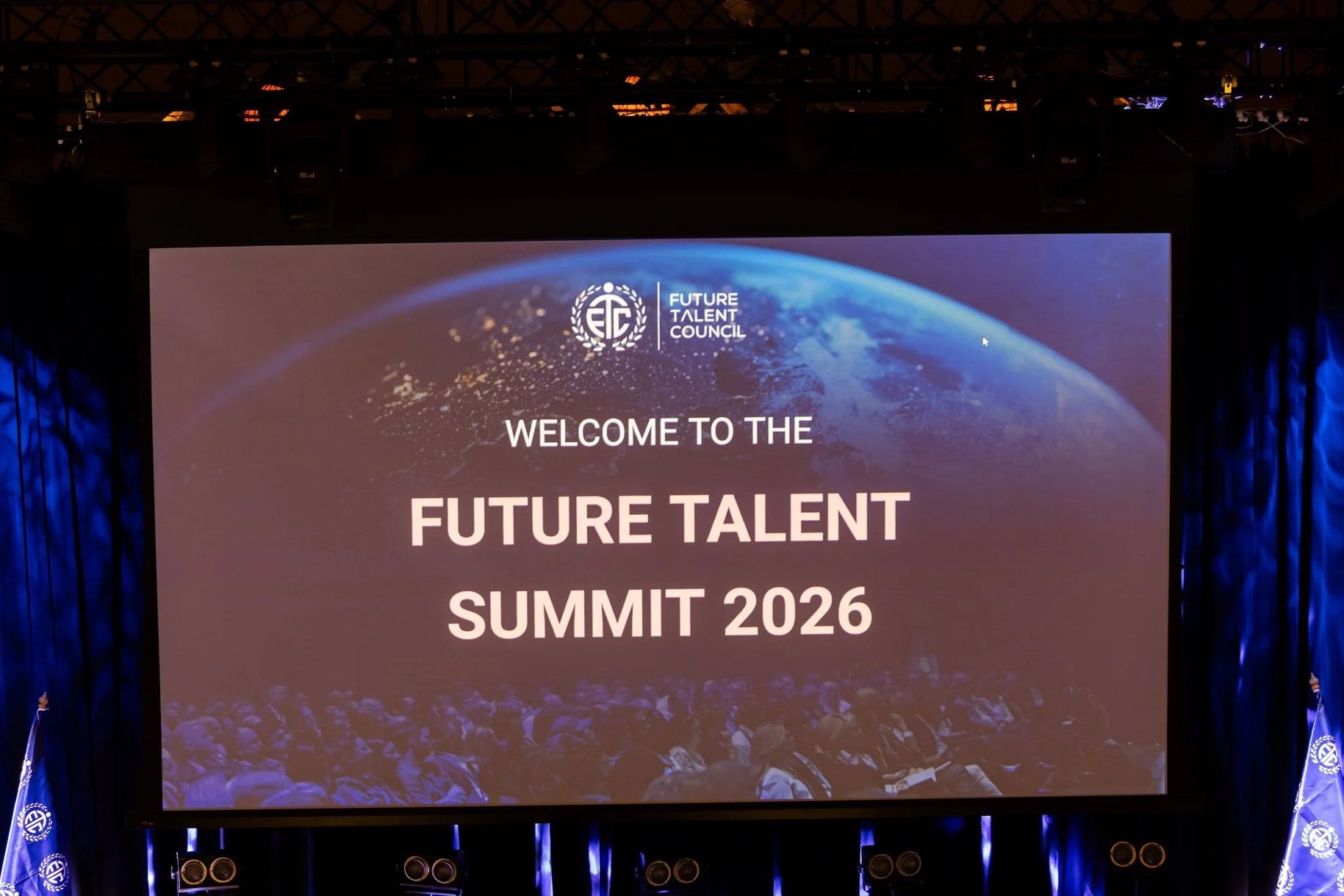
[Photo credit: Liza Simonsson]
The event was built around a focus on how we as humans position ourselves in a world that is being reshaped by artificial intelligence and technological advances. What does this mean for the ‘talent’ needed in the workplace?
I was deeply curious about whether what we have been building here at Learning Allowed would connect with a wider global discourse or not.
Right from the opening comments people were talking about:
Whether children are curious enough to be prepared for change
The need for any systems we are using in education and business to be more adaptive
The need for people who understand people - as a response to the development of tech.
This was taken to another level by the presentation of Dr Vivienne Ming, a thought leader who is driving deep and meaningful tech initiatives in a range of areas. Central to her message was that skills that were once described as ‘soft’ should be seen as so much more! She talked about ‘metalearning’ (the dimensions that shape a learning experience) and how by zooming in on measurable and definable foundational ‘skills’ we can predict ‘success’.
By understanding how an investment in such skills - the input - can produce certain positive ‘outputs’ - puts us in a position where we can increasingly enable effective educational experiences and position the individual as a key part of change - that brings the uniqueness of the human into a powerful collaboration with technology. It was a foundation that sparked many conversations and reflections over the two days. Some of these were encouraging - for example metalearning is a theme that is central to our methodology - that ambition and desire to make visible ‘how we learn’ is key to the thinking process we have created. Some were more challenging. Despite those early comments on Day 1 about children, so much of the conversation was focused on university students and above.
If our ambition is to really build educational experiences that put us in touch with those foundational skills that help us know how we learn - then starting at university is too late. Our research signals that this is a task that needs to be happening much earlier. The problem here is that, as we have found, such a focus does not seem to carry the same level of interest for investment. To really build talent pipelines and to enable companies (and individuals) to adapt and thrive there needs to be a greater recognition that we are going to have to be smarter about the way we share resources to make this happen.
Learning Allowed’s LEARN 2050 initiative seeks to offer a way of bringing communities together - to share resources that enable opportunities for all to engage. By unlocking our human edge - our uniqueness, authenticity and agency - and building those capabilities such as curiosity - the future moves from one that is intimidating to one that is full of possibilities.
Realise your possibilities for LEARN 2050 by joining our Change Maker Summit happening this November! ➡️ Registration details can be found at https://learn2050movement.sutra.co