I am delighted to share a response to Alexander Kopelman’s new book, For Real: Helping Children Remain Their Authentic Selves in a Limiting World. This book is not only timely in addressing critical challenges we face, it is also highly practical in offering solutions that generate genuine hope.
At Learning Allowed®, we have spent many years researching and writing in this area, and Alex’s book offers a profoundly valuable contribution to a much-needed conversation. It acts as an effective piece of knowledge exchange, taking deep insights and translating them into an accessible language that speaks directly to parents, educators, and policy-makers alike.
The Self-Narrative and the Weight of the Adult Lens
At its core, For Real explores how we come to see ourselves and construct our identities. Alex unpacks this by looking at what shapes our sense of personhood—exploring foundational concepts such as the "I-self" (the knower) and the "Me-self" (the known). He reminds us that humans naturally interpret their lives as stories.
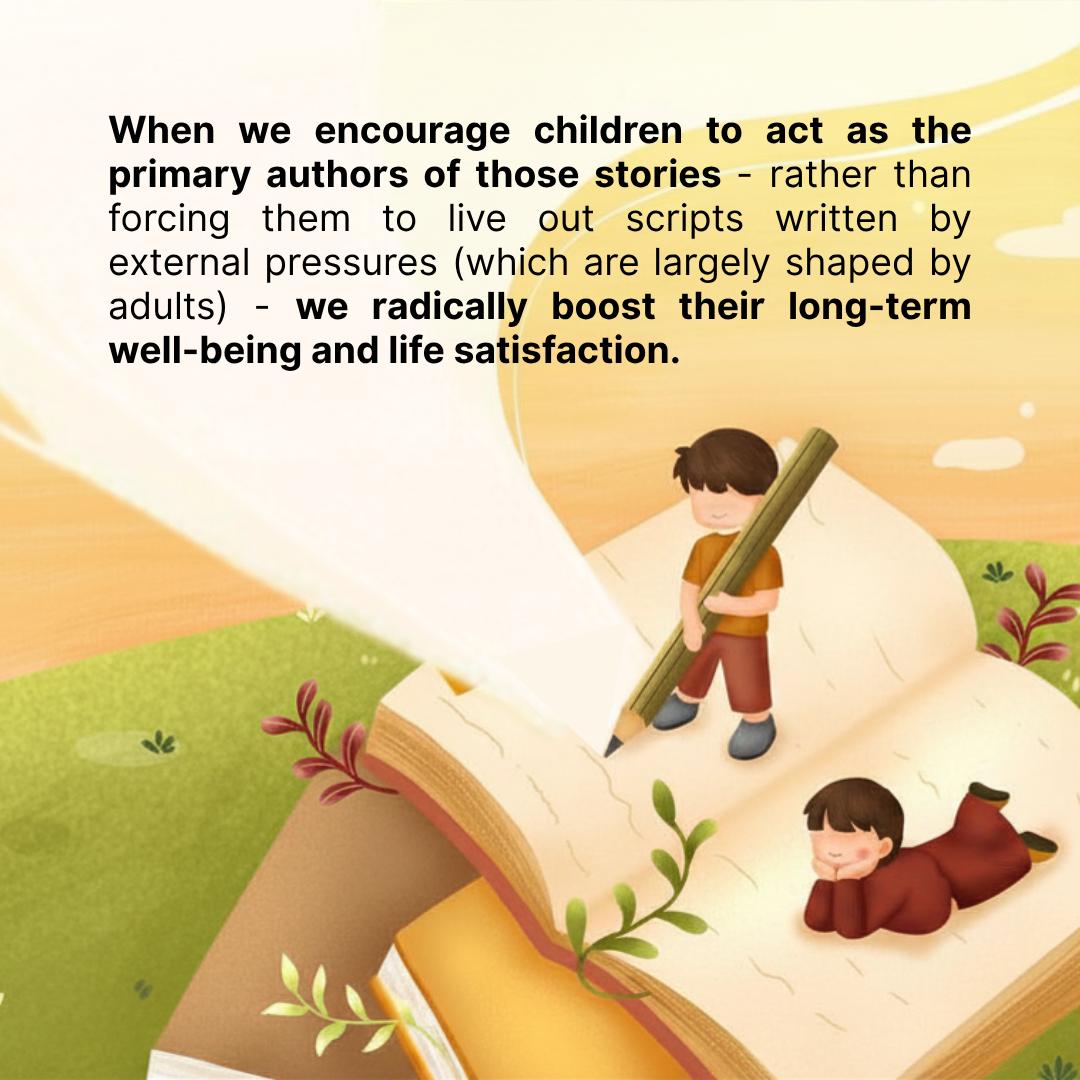
This illustration is crucial. Too often the spaces we live in are defined and shaped by adult perspectives of children as ‘becomings’ - valuing them for what they will be in the future - creating implications not just for what children experience but how they experience it.
As is shared in the book:
“To honor children’s authenticity is to recognize that every child, in every moment, is already enough.”
Dismantling Shame as a Feature of Power
One of the book’s most valuable and vital contributions is the needed discussion around shame as a feature of power. Alex doesn't shy away from exploring how traditional adult-child dynamics often resort to shame—whether consciously or unconsciously—to enforce compliance.
Shame is a corrosive tool of control; it forces children to mask their true selves, hiding their vulnerabilities and passions just to feel safe or accepted. To dismantle this, we must consciously shift our power dynamics. We must move away from compliance-driven authority and toward mutual relationships built on a desire to truly know, respect, and understand one another.
What Does Authentic Dialogue Actually Sound Like?
At the heart of For Real is a challenge. For children to experience their authentic selves, the adults in their lives must have the courage to do the exact same.
But what does this look like in practice? Alex outlines practical tools for deep, empathic communication:
The Gates of Speech: Choosing words that intentionally build trust and connection rather than manifesting shame.
Looping: An empathic listening practice where adults paraphrase and confirm what they have heard, ensuring the child feels deeply understood and seen.
Intergenerational Spaces with Meaning
For Real highlights just how much we need spaces where parents, educators, and children can come together in safe, relational environments. Authenticity is not something that can simply be taught, it has to be experienced as part of a journey of self discovery. Finding those spaces where we (both adults and children) can actively take the lead in directing our own ‘journeys’ is not always easy. This book makes this a focus of attention and opens doors that will make that journey easier.
We are so excited about the way in which this work aligns with ambitions we have for LEARN 2050® ⬅️
And we look forward to future collaborative opportunities with Alex and Authenticity Works - part of Children’s Arts Guild.