Why we need a Relational Approach to Research with Children

In case you missed the news, our new collaborative book project, The Ethics of Unlocking Research With Children, is officially out!
⬇️ This article summarises some of the ideas presented in the Introduction.
The System Is Holding Us Back
As researchers - the team who were part of this project shared a similar frustration: the current framework for ethical approval often feels built on outdated, adult-centric assumptions that compromise the quality and depth of the research.
The prevailing model too often relies on viewing the child as a passive object, undermining the widely accepted view of the child as an active meaning maker. As this work shows, this model is anachronistic and patriarchal, leading to a profound tension: how do you achieve genuine engagement when the system is designed primarily for control and protection?
When we restrict our methods to gain a "safe" tick-box clearance, or when researchers avoid engaging with certain topics to avoid the "hassle" of approval, we limit knowledge and risk misunderstanding the very issues we set out to study.
Re-setting ethical frameworks
Through the journey of writing this book - it became increasingly clear that if we are to generate richer, more meaningful research with children then we need a fundamental reform based on a relational model of engagement.
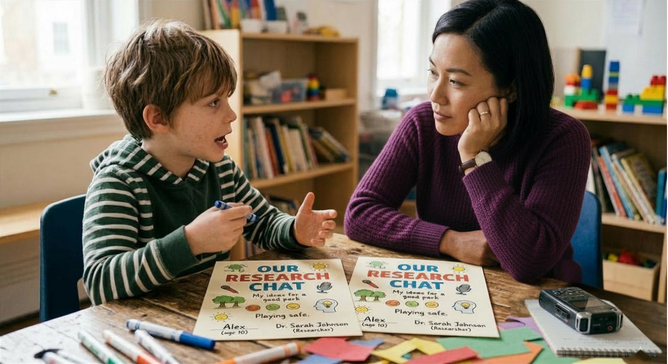
This reform encourages a focus on the following five levers:
Tackle Assumptions: We must move away from a deficit view of children as merely "becoming" and recognise their competence as "beings" who have a vital contribution to make in the present.
Prioritise Meaning (Not Risk): The central question needs to shift from simply "What risks are there?" to the more profound: "What does it mean to the child participant to be involved?" This focuses on a child-centred axis rather than an adult-centric risk assessment.
Ensure a Common/Accessible Language: We need an open dialogue about fundamental terms like consent, voice, and participation to ensure mutual understanding and a truly collaborative process.
Promote Awareness and Understanding: Ethics training must move beyond basic compliance. We need more resources that acknowledge the everyday realities of children's lives and actively involve children in shaping what ethical research looks like.
Advance the Centrality of Collaboration/Partnership: A truly ethical approach must embrace the fluid and evolving nature of the research journey. Ethics is not a one-off sign-off; it is an ongoing conversation between the researcher, participants, and approving bodies.
Effective research with children is ultimately about connections and building those relationships of trust amongst all stakeholders - from the researcher to the ethics board to the children and their adults.
Read the full argument and discover the innovative solutions here: The Ethics of Unlocking Research With Children
Find out more about opportunities to bring a research focus to your work as part of our LEARN 2050 movement.