The headlines are full of a singular anxiety: children and their screens. We hear calls for bans and stricter rules as we ask: "How can we protect our children?" But is this the right question?
Is the 'screen time emergency' actually a symptom of a much deeper 'disconnection' crisis?
While we focus on the devices in our hands, have we perhaps forgotten what it really means to connect and belong in our homes?
Setting an example...
In the current debate, children are often treated as passive objects to be controlled or 'saved.'
But our view is that children are active meaning makers who navigate the world by making sense of their experiences, which includes observing the adults they love.
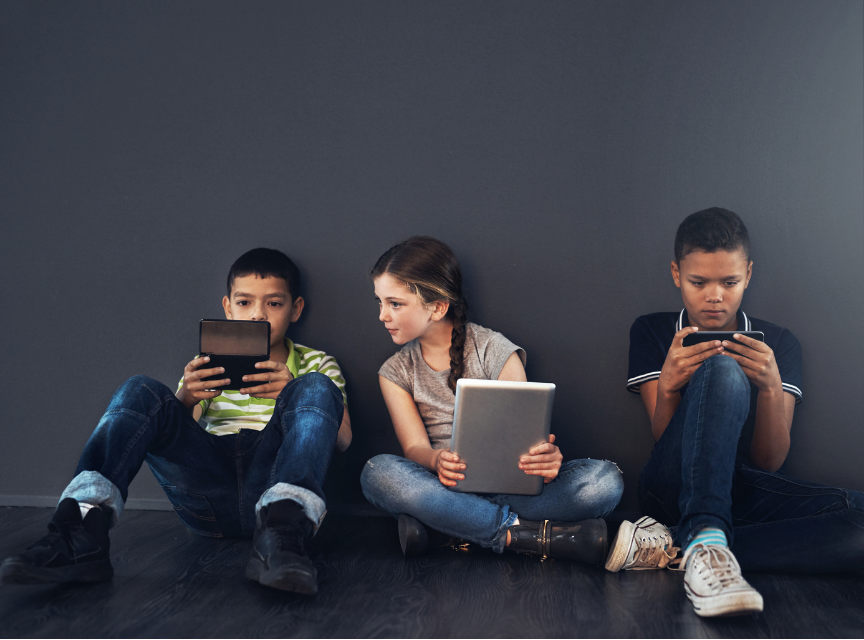
Simply asking children to put down their phones while we continue to scroll completely misses both the point and the opportunity.
The Point: Of course, when we physically inhabit the same room but mentally reside in separate digital silos, we are 'disconnected'!
In these moments, we are losing the quality of relationships that come through genuine emotion and presence. Doesn't it need adults to lead by example and start by re-examining their screen time and social media use?
The Opportunity
This debate should be sparking a whole range of conversations about how we value relationships, time and experiences and not just about banning children from social media and controlling their screen time - but these seem absent.
A deeper conversation
We often assume children lack the competence to value their own digital lives.
While there is plenty of research on the benefits that children find in digital spaces, perhaps the focus needs to shift. What if we had a deeper, more open conversation about why we are all-adults and children alike-turning to our screens?
How is the digital world helping us (or hindering us) from expanding our personal sense of value, voice, and vision?
This isn't a debate that should be defined by silencing the child and assuming adults know best; rather, it's an invitation to a collaboration.
It's an opportunity to examine the spaces we share and what we truly want from the 'moments' we have with one another.
Reclaiming the "Encounter"
In our work on the 'Art of Belonging', we suggest that belonging isn't just something we "have"; it's an active process of "fitting in" built through high-quality, authentic relationships.
Within the home, it seems we might have lost the need to invest in those meaningful encounters?
A true encounter isn't a managed meeting or a set of house rules; it is a shared space where we choose to PLUG IN to one another:
P - Power up our assumptions: What if we start with questions rather than pretend we know the answers? Let's be curious about the perspectives of one another.
L - Nurture a 'Learn to Be' culture: What might it mean to be a 'learning family' - where we explore who we are and who we can be together.
U - Unify language: How effective are we at communicating? Does each member of the family have a voice and feel listened to?
G - Grow meaningful opportunities: Invest in creating moments of connection - shared experiences that hold genuine value for everyone.
IN - Inspire Change Makers: When we belong, we find the confidence to act. By connecting at home, we empower one another to navigate the complexities of the world outside.
Take a moment to share a vision that allows each member of your family to PLUG IN to one another.
Rediscover what it means to belong and build connections that make all the difference.